
Lashing system configurator
Choose the right lashing system for your load
Selecting the right lashing system depends on the type of load, its weight, the securing method, and the anchoring points in the vehicle. An incorrectly selected system may not provide adequate load securing—even if it appears strong.
This configurator will guide you through 7 simple steps to choose the right lashing system in accordance with EN 12195-2.

How does the lashing system configurator work?
The configurator allows you to select a lashing system perfectly matched to your load and transport method in just a few steps. You don’t need to know all the parameters—the system guides you step by step.
1. Choose the length
Start by selecting the appropriate length for your application. The length depends on the size of the load and the securing method—shorter systems work well for compact loads, while longer ones are suitable for larger or irregular cargo.
2. Select lashing capacity (LC)
Next, choose the lashing capacity (LC), expressed in daN. This is one of the most important factors affecting transport safety:
- for light loads – lower LC values
- for pallets and standard transport – medium values
- for heavy machinery and structures – high LC values
3. Choose end fittings (hooks)
Depending on the anchoring points, select the appropriate hook type, e.g. standard hook, S-hook, or other variants. The correct choice ensures stability and quick installation.
4. Select the tensioner
The tensioner ensures proper tightening of the system. You can choose:
- standard tensioner – for general use
- ERGO tensioner – more ergonomic and safer for higher loads
5. Review configuration and order
After selecting all parameters, you receive a lashing system tailored to your needs—compliant with EN 12195-2 and ready for safe use.
Thanks to the configurator, you can quickly create a custom lashing system without technical consultation—although our specialists are always available if needed.
CALCULATIONS FOR DIAGONAL LASHING OF A STABLE LOAD
in accordance with EN 12195-1:2011

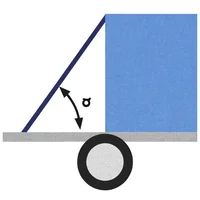
(1) Angle α measurement
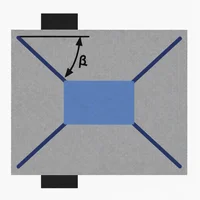
(1) Angle β measurement
(3)Coefficient of friction μ
(excerpt from EN 12195-1:2011)
| Material combination: | μ |
| Sawn wood / Plywood (wood/wood) | 0,45 |
| Steel frame / Chequered aluminium (steel/aluminium) | 0,30 |
| Plastic pallet / Plywood (plastic/wood) | 0,20 |
| Smooth concrete / Sawn timber battens (concrete/wood) | 0,55 |
| Anti-slip mat / All materials | 0,60 |
USER INSTRUCTIONS:
- Measure the lashing angles using two angle gauges and check that angle α is within the range of 20° to 65°, and angle β is within the range of 6° to 55°.
- Determine the weight of the load and find the corresponding value in the table (in tonnes).
- Determine the coefficient of friction μ for the given case (see the “coefficient of friction” table).
- Reading the result: On the line corresponding to the selected coefficient of friction μ, you can find the required lashing capacity (LC) for 4 lashing systems or chains used in diagonal lashing.
Przykładowy odczyt:
- Lashing angles: 0° < α < 65° and 6° < β < 55°
- Load weight: 5 tonnes
- Coefficient of friction: μ = 0.4
- To ensure compliance with EN 12195-1, 4 lashing devices with a lashing capacity of LC = 2500 daN are required.


