
Car lashing compliant with VDI 2700 is a fundamental element of safe vehicle transportation. According to the VDI 2700 standard, proper securing of vehicles on a tow truck is crucial for the safety of the driver and other road users. In this article, we explain how to correctly use transport car lashing, what the standard requires, and how to avoid the most common mistakes.
Properties of VDI 2700-compliant car lashing:
- Performance: ETA ≥ 0.5
- Markings and certifications (label + inspection tag)
- Meets the requirements of EN 12195-2
- adapted to the requirements of VDI 2700 (sections 8.1 and 8.2)
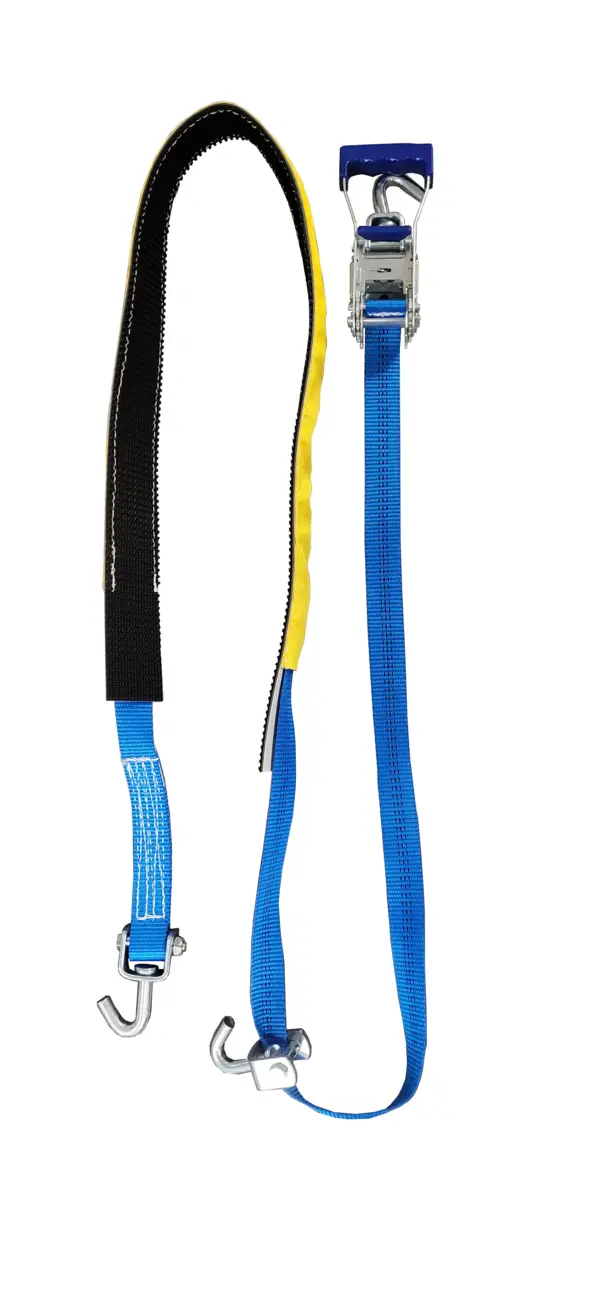
⚠️ According to VDI 2700 (8.1 and 8.2), the webbing must not have direct contact with the tire – therefore, special webbing protectors (e.g., rubber or rubber-textile) are used.


What is the VDI 2700 standard?
New VDI 2700 standards (8.1 and 8.2) – what do they mean for vehicle transport?
In September 2024, new guidelines of the VDI 2700 standard, parts 8.1 and 8.2, came into force, regulating how vehicles should be secured on car transporters and tow trucks. These changes represent an important step toward improving the safety of vehicle transport—both light and heavy—and introduce more detailed requirements for transport companies operating in Germany and across Europe.
The VDI 2700 standard, developed by the Association of German Engineers (VDI), defines the rules for safe load securing in road transport. Its main objective is to ensure the stability of transported vehicles through the proper use of car lashing and securing techniques.
Scope of the new parts of the standard:
- VDI 2700 8.1 – applies to light commercial vehicles and passenger cars with a gross weight of up to 4.5 tonnes
- VDI 2700 8.2 – covers medium and heavy commercial vehicles with a gross weight of up to 20 tonnes
Key requirements of the VDI 2700 standard:
- use of an appropriate number of car lashing
- proper tensioning of the webbing
- correct securing angles
- use of certified car lashing compliant with EN 12195-2
The new VDI 2700 8.1 and 8.2 guidelines place particular emphasis on proper wheel securing and the quality of the webbing used. In practice, this means the need to use proven and certified solutions, especially in international transport.


Key changes in VDI 2700
No contact between webbing and the tire
One of the key changes is the prohibition of direct contact between the webbing and the tire.
Why is this important?
- protects tires from damage
- increases vehicle stability
- improves transport safety
In practice, this means using:
- webbing protectors (“grass sleeves”)
- protective pads and elements
Requirements for transport webbing
The webbing must:
- pass dynamic tests
- be resistant to weather conditions
- have clear markings
- be regularly inspected
Construction of the Car lashing VDI 2700

How to secure a car on a tow truck in accordance with VDI 2700?
Properly securing a vehicle on a tow truck requires the use of appropriate VDI 2700-compliant car lashing and the correct securing technique.
Step by step:
- Position the vehicle centrally on the tow truck
- Apply the parking brake
- Place the car lashing on the vehicle wheels (most commonly 3-point systems)
- Attach the hooks to the anchoring points
- Tension the webbing using a ratchet
- Check the vehicle stability
Remember: the webbing must not rub against the tire or sharp edges.

Vehicle securing schemes
The VDI 2700 standard introduces five securing schemes that take into account the specifics of different types of vehicles:
- Personal: Point attachment within the suspension.
- Delivery vehicles: Techniques tailored to a higher center of gravity.
- Heavy vehicles: Use of additional beams and wedges.
- Hybrids: Combinations for unusual vehicles.
- Electric: Methods to protect sensitive components such as batteries.
The choice of method depends on the vehicle’s weight and construction.
Impact of VDI 2700 standards on the transportation industry
1. Adjustment costs
- Purchasing certified webbing, wedges and additional components can generate significant costs.
- Regular testing and servicing require money.
2. New procedures and training
- Drivers and crew must receive specialized training on new techniques for securing vehicles.
- Need to implement new procedures for loading and securing vehicles.
3. Risk of penalties
- Non-compliance during inspections in Germany can result in hefty fines and the detention of transport.
Modern Forankra transport solutions – VDI 2700-compliant safety
Vehicle and cargo transport requires reliable solutions that ensure safety at every stage of the journey. Forankra transport solutions are designed for professional load securing—including vehicles on tow trucks—in accordance with the requirements of VDI 2700 (8.1 and 8.2).
Durability and reliability of transport webbing
Our securing solutions are made from high-quality synthetic materials resistant to:
- mechanical damage
- moisture and weather conditions
- intensive use
As a result, webbing for tow trucks and car transporters maintains its properties even in demanding working conditions.
Car lashing tailored for vehicle transport
The Forankra range includes solutions designed for various applications, including:
- VDI 2700-compliant car lashing for securing vehicles
- wheel lashing systems (e.g., 3-point)
- heavy-duty solutions for demanding loads
Each product is designed to ensure maximum stability and safety during transport.
Compliance with standards – safety without compromise
Forankra solutions meet the requirements of EN 12195-2 and VDI 2700 (especially 8.1 and 8.2), meaning they are suitable for professional vehicle securing.
Selected models are also equipped with special webbing protectors (“grass sleeves”) that:
- increase friction on the tire
- prevent shifting
- protect the wheel from damage
This ensures that transport is carried out in line with current safety standards.


Which car lashing should you choose?
Choosing the right VDI 2700-compliant car lashing is crucial for safe vehicle transport. There are many solutions available on the market, so it’s important to know what to look for when selecting webbing for tow trucks.
What to consider when choosing car lashing?
- Strength (LC): Determine the load the webbing must withstand. VDI 2700-compliant car lashing is available in different capacity classes, suitable for both light and heavy vehicles.
- Length: The correct length ensures convenient securing and minimizes the risk of damage.
- Safety standards: Choose solutions compliant with VDI 2700 and EN 12195-2—this guarantees quality and legal compliance.
What car lashing is best for vehicle transport?
Car lashing should be equipped with appropriate hooks and protective elements to prevent damage to rims and paintwork.
Most common mistakes when choosing and using webbing:
- using webbing with insufficient strength
- incorrect length
- lack of compliance with VDI 2700
- using damaged or worn webbing
- improper tensioning
To avoid these mistakes, regularly inspect the condition of the webbing and use proven, certified solutions.
FAQ – Frequently Asked Questions
A minimum of 4 – one for each wheel.
VDI 2700-compliant car lashing refers to certified solutions in accordance with EN 12195-2 and additional VDI 2700 requirements (especially 8.1 and 8.2), designed for securing vehicles. These are most commonly wheel lashing systems (e.g., 3-point) with appropriate strength, equipped with special webbing protectors (“grass sleeves”) that increase friction, prevent shifting on the tire, and protect it from damage during transport.
In Germany, VDI 2700 is considered a de facto mandatory standard—inspection authorities require its application during transport. It is also widely enforced in Austria and Switzerland. In Poland, it is not legally mandatory, but its use is strongly recommended, especially in international transport.


